

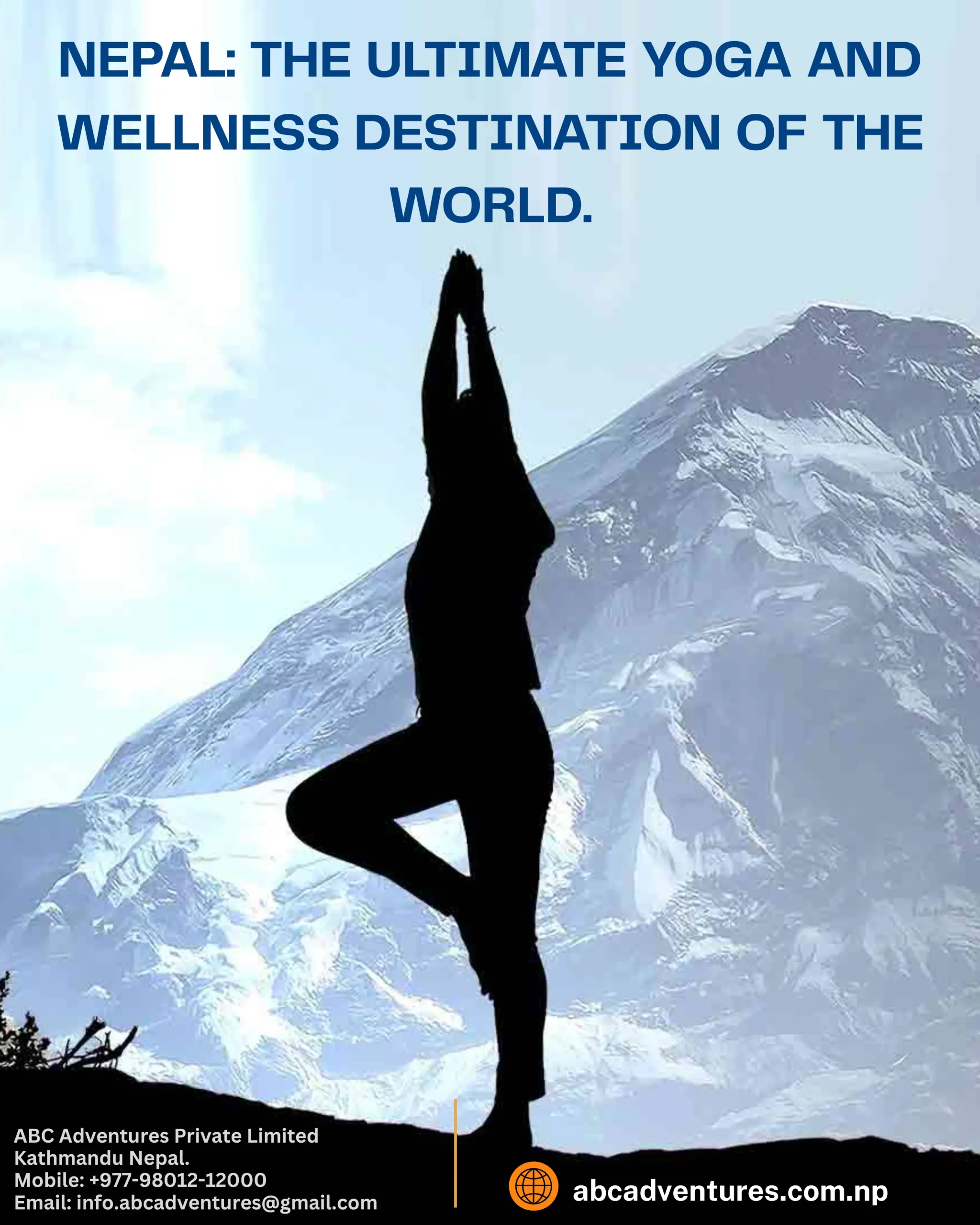
Nepal has become a hotspot to yoga and wellness tourism in the world. Himalayan nested in the Himalayas is an ancient kingdom that inherits spiritual traditions, breathtaking natural attractions, and outstanding value into a wellness experience that can change everyone regardless of their location on Earth.
The reason why Nepal is the world leader in wellness tourism:
Yoga Philosophy: The Birthplace.
The origin of yoga cannot be separated with Nepal. This is the place where Buddhism was established, and the place is very important in the Hindu spiritual tradition. Since the time immemorial, these mountains have been used by enlightened masters perfecting yoga in its physical form and in its spiritual aspects. You will not go to Nepal and only learn the yoga postures, you will be tapping into the primary source of yoga and millenniums of wisdom.
The tangible benefits are a result of this historical relationship. It is in the Himalayan landscape itself that there is a reverberation of endless pilgrims who have practiced there. Old literature mentions these mountains to be naturally favorable to meditation and spiritual progress. In these countries, the contemporary practitioners always say that the practice is more profound and accessible in Nepal compared to their mother countries.
Incomparable Natural Environment.
The Himalayan location offers a wellness work setting. It is aided by the pure mountain air, the stormy landscape and the natural rhythm of the mountain life. The respiratory capacity and oxygenation are natural elevations of altitude. The grand mountains provoke awe, humility, and view that help in the psychological and spiritual development.
The biodiversity of Nepal in subtropical forests to alpine meadows produces curative natural environments at different altitudes. Forest bathing, mountain walking, and aqua new activities blend well with yoga and meditation practice taking care of the entire individual.
Extraordinary Quality and Affordability.
Nepal provides the finest wellness experiences at the fraction of the Western prices. Good yoga teachings, comfortable stay, healthy Ayurvedic food and deep experiences are also incredibly cheap. Two weeks of intensive retreat in California or Europe could cost 3,000 and above, the same trip in Nepal could cost 500-1,500.
This is wellness that is democratized. Economically stable people are able to book long retreats. Educators have an opportunity to take higher qualifications. Families are able to incorporate yoga and travelling. Such accessibility of finances means that one can commit more to practice without worrying about finances.
Year-Round Ideal Climate
Nepal is also a destination that supports yoga retreats all year round unlike many other destinations that have limited seasons. Autumn (September-November) and spring (March-May) are the ideal seasons, the weather is pleasant, the sky is clear, and the climate does not change significantly. The best months are October and April when the weather is perfect.
Practitioners are attracted even in monsoon season (June-August). The low prices, the reduced tourists, plush sceneries, and the reflective nature of the ever-present rain make deep meditation easier. During winter, the mountains are clear and serious practitioners can have the best of time.
Wellness Infrastructure in Nepal.
The country of Nepal has constructed the best and modern wellness facilities which have been created with the sole purpose of yoga and wellness tourism:
Diverse Retreat Centers
There are simple ashrams that stress on practice and simplicity, all the way up to luxury wellness resorts with spa services, fancy cuisine, and so on, Nepal has something to offer to all tastes and money. A large number of centers focus on a particular tradition- Hatha yoga, Vinyasa flow, Kundalini or Ayurvedic healing.
The facilities vary in size and sophistication and include family-owned enterprises in mountain villages as well as enterprise-level facilities that are of international quality. There is not a lack of quality training- Nepal has had competent educators who believe in pure teaching, and not in commercialization.
Traditions and Experienced Teachers.
Nepal has yoga teachers trained in centuries old continuous lineages. A number of them have families of spiritual practitioners. In contrast to Western yoga instructors who were taught isolated practices, Nepali instructors perceive yoga as comprising of physical practice, breathing, meditation, philosophy, and lifestyle.
Educators in this area lay stress on practicality rather than entertainment and spectacle. Classes push you in the right way but still focus on spiritual aspects. Examples of traditional guru-shishya (teacher-student) relationships include individual attention and mentorship.
Combined Wellness Providences.
In addition to the yoga classes, Nepal has other wellness options:
Ayurveda – a traditional healing system of South Asia. Personal constitution and imbalances are treated through consultation, massage, herbal treatments and dietary guidance.
Meditation Retreats – Intensive silent meditation retreats, based on Buddhist and Hindu traditions, with or without yoga.
Spiritual Tourism – Visits to religious temples, pilgrimage locations and monasteries are led visits that enhance spiritual knowledge and application context.
Mountain Trekking and Nature Immersion: Several day mountain hikes with yoga and meditation will be used to generate holistic wellness experiences.
Wellness Consultations – Ayurvedic physicians, spiritual instructors and wellness coaches offer personalized advice based on individual requirements.
Key Wellness Destinations
The spiritual center is Kathmandu Valley, which is both the place of access to spiritual sites (Pashupatinath Temple, Boudhanath Stupa) and great retreat opportunities. Perfect choice in cultural immersion and spiritual tourism.
Enhanced natural surroundings Fix the peaceful lake city of Pokhara, the city offers the quiet conditions ideal in long-term practice. The mountain landscapes and the lakeside meditation services produce very strong healing environments.
Mountain Foothills have remote village retreats with focus on genuine cultural assimilation and demanding altitude to ardent practitioners.
The Eastern Nepal offers untouched wilderness and secluded solitude to engage in profound transformational work not surrounded by any tourism.
What Makes Nepal Unique
True Spiritual Environment.
Nepal is not a wellness destination that has been commercialized in the sense that the country is still practicing spiritual traditions. You are introduced to real world practice in everyday life- prayer flags, temple rituals, and meditation spaces are part of the landscape, rather than attractions. This reality also generates strong resonance that can never be recreated in the wellness spaces that are constructed artificially.
Integration with Daily Life
Wellness is not an isolated aspect in studios and spas. The whole culture favors health and spiritual growth. Preeminence is on vegetarian diets. Rituals are focused on the present and mindfulness. Community and family ties are given priority. Such cultural values that support wellness are internalized by visitors.
Transformational Power
Together with natural instruction, divine geography, community support, and environment, this culminates to a situation of real change. Nepal retreats are said to trigger significant life changes by many practitioners- career changes, relationship changes, spiritual experience or trauma recovery.
The comprehensive effect of wellness occurrence here, which considers the physical, mental, emotional, and spiritual aspects all at the same time, brings long-term outcomes that can be felt years after the departure.
Travel Planning Nepal Wellness Adventure.
Best Time to Visit: The best time to visit is during October and April. Ideal conditions can be found in September-November and in March-May.
Retreat times: 7-14 days, give great advantages. The long duration of stay (3 or more weeks) helps to transform more.
Budget Expectations: Day by day all-inclusive expenses are between 30-50 (budget) and 100-200+ (premium). A 2-week retreat is normally priced at 400-2000 dollars.
What to Expect: Normally, a day is followed by morning meditation and pranayama, asana classes, philosophy classes, nutritious meals, and night-time meditations. Majority of centers promote the least use of technology, which helps in deep presence.
Why Choose Nepal?
Nepal represents the convergence of authentic yoga tradition, ideal natural environment, experienced teachers, and exceptional value. It’s where ancient wisdom remains alive, mountains amplify transformation, and genuine spiritual community supports growth.
Whether you’re seeking physical health, mental peace, spiritual awakening, or comprehensive wellness, Nepal delivers what few destinations can match–the real thing, in its original context, at a price that honors your commitment.
The Himalayan peaks have welcomed seekers for millennia. They’re ready to welcome you.